Open source RGB lighting control that doesn't depend on manufacturer software


One of the biggest complaints about RGB is the software ecosystem surrounding it. Every manufacturer has their own app, their own brand, their own style. If you want to mix and match devices, you end up with a ton of conflicting, functionally identical apps competing for your background resources. On top of that, these apps are proprietary and Windows-only. Some even require online accounts. What if there was a way to control all of your RGB devices from a single app, on both Windows and Linux, without any nonsense? That is what OpenRGB sets out to achieve. One app to rule them all.


Version 1.0rc2, additional downloads and versions on Releases page

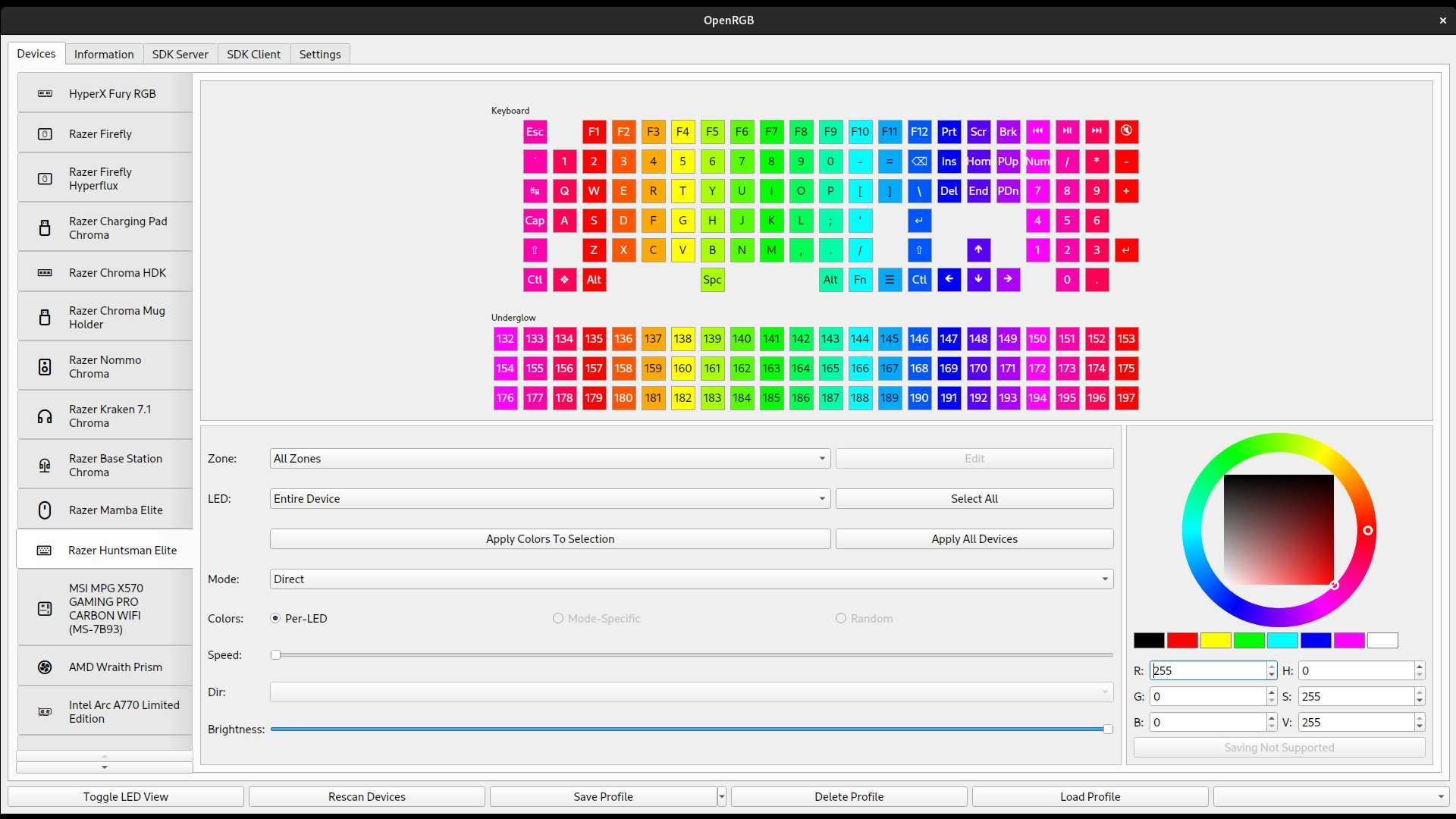
OpenRGB user interface

Control RGB without wasting system resources

Lightweight User Interface

OpenRGB keeps it simple with a lightweight user interface that doesn't waste background resources with excessive custom images and styles. It is light on both RAM and CPU usage, so your system can continue to shine without cutting into your gaming or productivity performance.
OpenRGB rules them all

Control RGB from a single app

Eliminate Bloatware

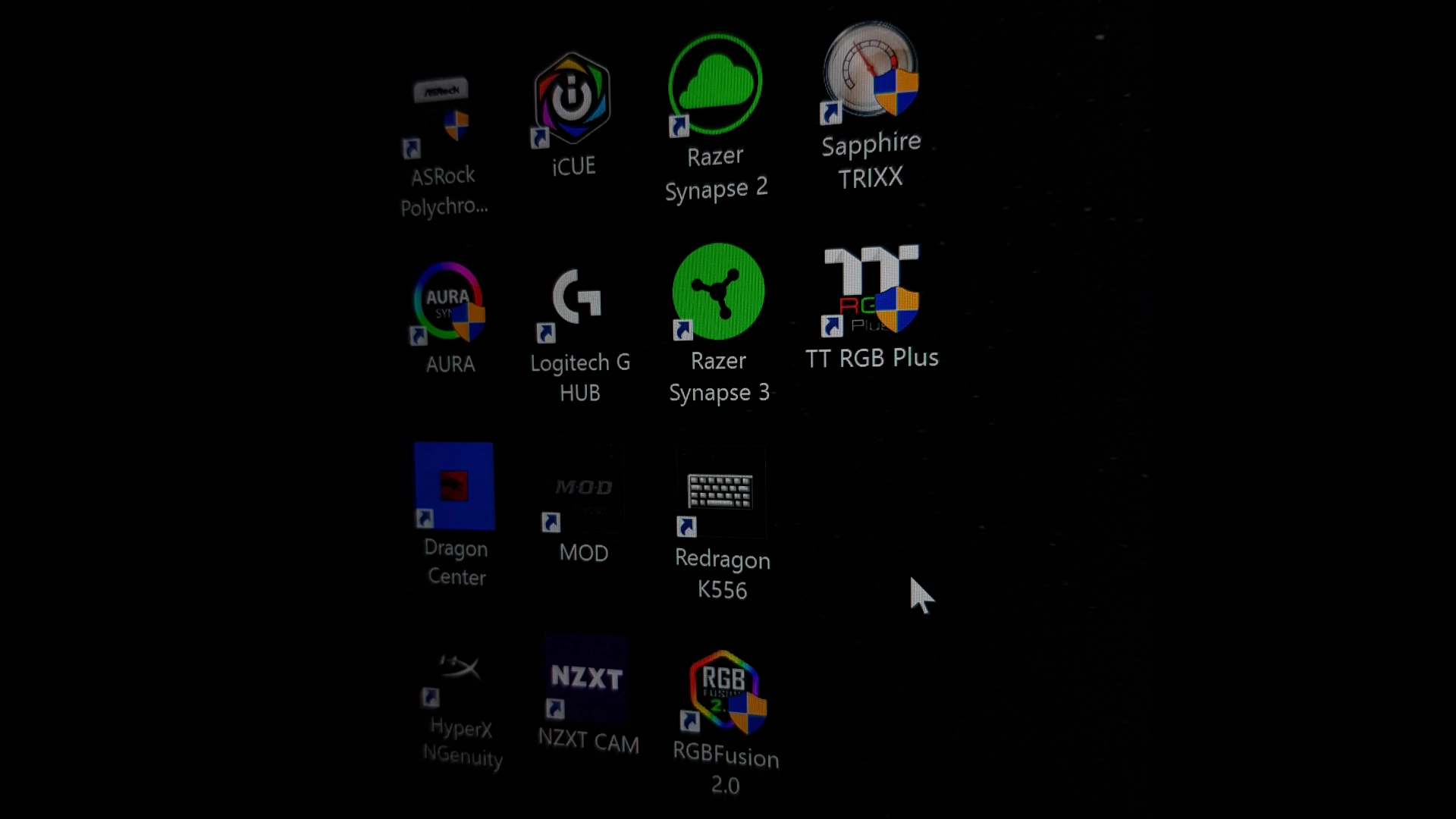
If you have RGB devices from many different manufacturers, you will likely have many different programs installed to control all of your devices. These programs do not sync with each other, and they all compete for your system resources. OpenRGB aims to replace every single piece of proprietary RGB software with one lightweight app.

OpenRGB is open source software

Contribute your RGB devices

Open Source

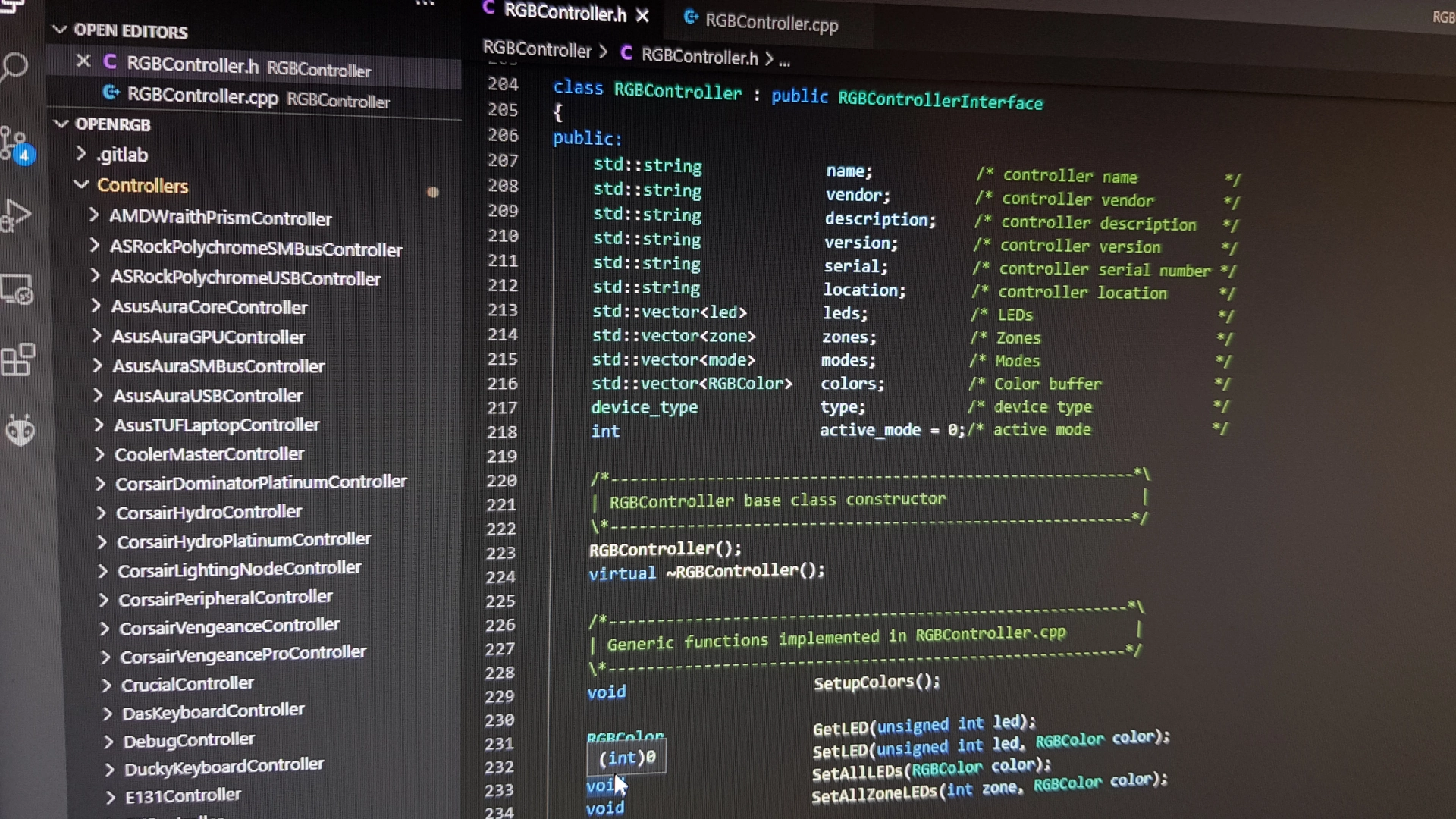
OpenRGB is free and open source software under the GNU General Public License version 2. This means anyone is free to view and modify the code. If you know C++, you can add your own device with our flexible RGB hardware abstraction layer. Being open source means more devices are constantly being added!


Check out the source code on GitLab
OpenRGB is Cross-Platform

Control RGB on Windows, Linux, and MacOS

Cross-Platform

OpenRGB runs on Windows, Linux and MacOS. No longer is RGB control a Windows-exclusive feature! OpenRGB has been tested on X86, X86_64, ARM32, and ARM64 processors including ARM mini-PCs such as the Raspberry Pi.

Com Full Sets -2021- ((full)) | Emily18

The release of Emily18's full sets in 2021 had a significant impact on the online community. Fans and collectors eagerly anticipated each new set, sharing and discussing them on social media platforms and online forums. The phenomenon brought people together, creating a sense of camaraderie and shared enthusiasm.

Please be aware that searching for "full sets" of specific creators often leads to unofficial or "leaked" third-party websites. These sites frequently host malicious software, aggressive advertisements, or phishing scams. It is highly recommended to use official creator links to ensure digital security and support the artist directly. Emily18 Com Full Sets -2021-

: Since the original content was produced in the late 2000s, resolution often varies. Re-mastered 2021 sets typically offer standard HD (720p or 1080p), though early 2000s sets may still show film grain or lower-resolution digital sensor noise. The release of Emily18's full sets in 2021

The Emily18 Com series (2021) comprises a comprehensive set of 1 018 digital artifacts ranging from high‑resolution images and audio clips to annotated textual transcripts. Although the series was released publicly in late 2021, no systematic scholarly assessment of its content, structure, or potential research applications has yet been published. This paper presents a descriptive and exploratory analysis of the full 2021 collection. We detail the provenance of the data, the taxonomy of its constituent items, and the preprocessing pipeline required for reproducible research. Using a combination of statistical profiling, network‑based clustering, and topic modelling, we uncover three dominant thematic clusters— Personal Narrative , Technical Demonstration , and Community Interaction —and illustrate how these clusters map onto temporal release patterns. The findings highlight the collection’s value for studies in digital humanities, media archaeology, and human‑computer interaction, and we provide a publicly available Python‑based toolkit to facilitate further investigation. Please be aware that searching for "full sets"