Zxcopy Decoding Software Download — Link Link !full!

The ZX Spectrum, launched in 1982 by Sinclair Research, became one of the most popular 8‑bit home computers in Europe. Its success was built not only on affordable hardware but also on a vibrant ecosystem of software, games, and utilities that were often distributed on magnetic cassette tapes. To preserve, analyze, and redistribute these historic tapes, a number of “decoding” tools have been created over the decades. is one of the most well‑known of these utilities. It allows users to convert raw audio recordings of ZX Spectrum tapes into the digital formats that modern emulators and archival tools can understand.

Place the encrypted target IC card flat against the reader’s physical . On your PC screen, click the "Start decoding" command button. The software will run sequential key combinations against the card sectors. Step 3: Write to the Blank Keyfob zxcopy decoding software download link link

: Capable of breaking encryption on various IC cards to facilitate duplication. Multi-Frequency Support The ZX Spectrum, launched in 1982 by Sinclair

Are you looking to write your decoded credentials onto an utilizing NFC card emulation? Share public link is one of the most well‑known of these utilities

In the realm of specialized data management and security, specific tools arise to handle unique, legacy, or proprietary file formats. is one such utility, often sought after for its ability to handle complex decoding tasks, particularly those relating to older systems or specific data protection protocols.

The built-in decryption engine uses a password library to compute the sectors of the card.

Plug your hardware into the computer. Ensure that the text layout in the lower-left corner of the PC software updates to state or "successful connection" . If it does not recognize the device, you may need a dedicated USB-to-Serial fallback driver (such as a CH340 driver replacement via Zadig ). Step 2: Decode the Source Card

Game Features

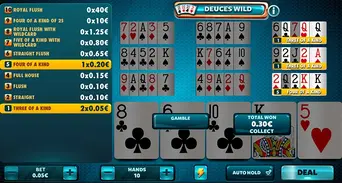
Use the twos to obtain combinations with a prize
Deuces Wild: Use the twos to obtain combinations with a prize.
Any hand equal to or higher than a three of a kind will have a prize
Deuces Wild: Any hand equal to or higher than a three of a kind will have a prize.
Up to 50 hands
Up to 50 hands.
Gamble Mini Game, where you can multiply your winnings
Gamble Mini Game, where you can multiply your winnings.

Play wherever you want

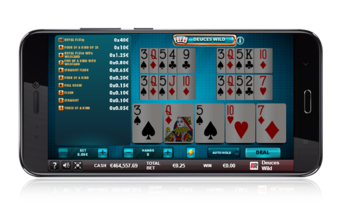
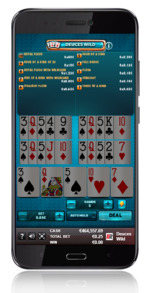
Play on your computer or on your smartphone. This game adapts to your smartphone screen, you can play in portrait or landscape modes.

PC
landscape
portrait

The ZX Spectrum, launched in 1982 by Sinclair Research, became one of the most popular 8‑bit home computers in Europe. Its success was built not only on affordable hardware but also on a vibrant ecosystem of software, games, and utilities that were often distributed on magnetic cassette tapes. To preserve, analyze, and redistribute these historic tapes, a number of “decoding” tools have been created over the decades. is one of the most well‑known of these utilities. It allows users to convert raw audio recordings of ZX Spectrum tapes into the digital formats that modern emulators and archival tools can understand.

Place the encrypted target IC card flat against the reader’s physical . On your PC screen, click the "Start decoding" command button. The software will run sequential key combinations against the card sectors. Step 3: Write to the Blank Keyfob

: Capable of breaking encryption on various IC cards to facilitate duplication. Multi-Frequency Support

Are you looking to write your decoded credentials onto an utilizing NFC card emulation? Share public link

In the realm of specialized data management and security, specific tools arise to handle unique, legacy, or proprietary file formats. is one such utility, often sought after for its ability to handle complex decoding tasks, particularly those relating to older systems or specific data protection protocols.

The built-in decryption engine uses a password library to compute the sectors of the card.

Plug your hardware into the computer. Ensure that the text layout in the lower-left corner of the PC software updates to state or "successful connection" . If it does not recognize the device, you may need a dedicated USB-to-Serial fallback driver (such as a CH340 driver replacement via Zadig ). Step 2: Decode the Source Card